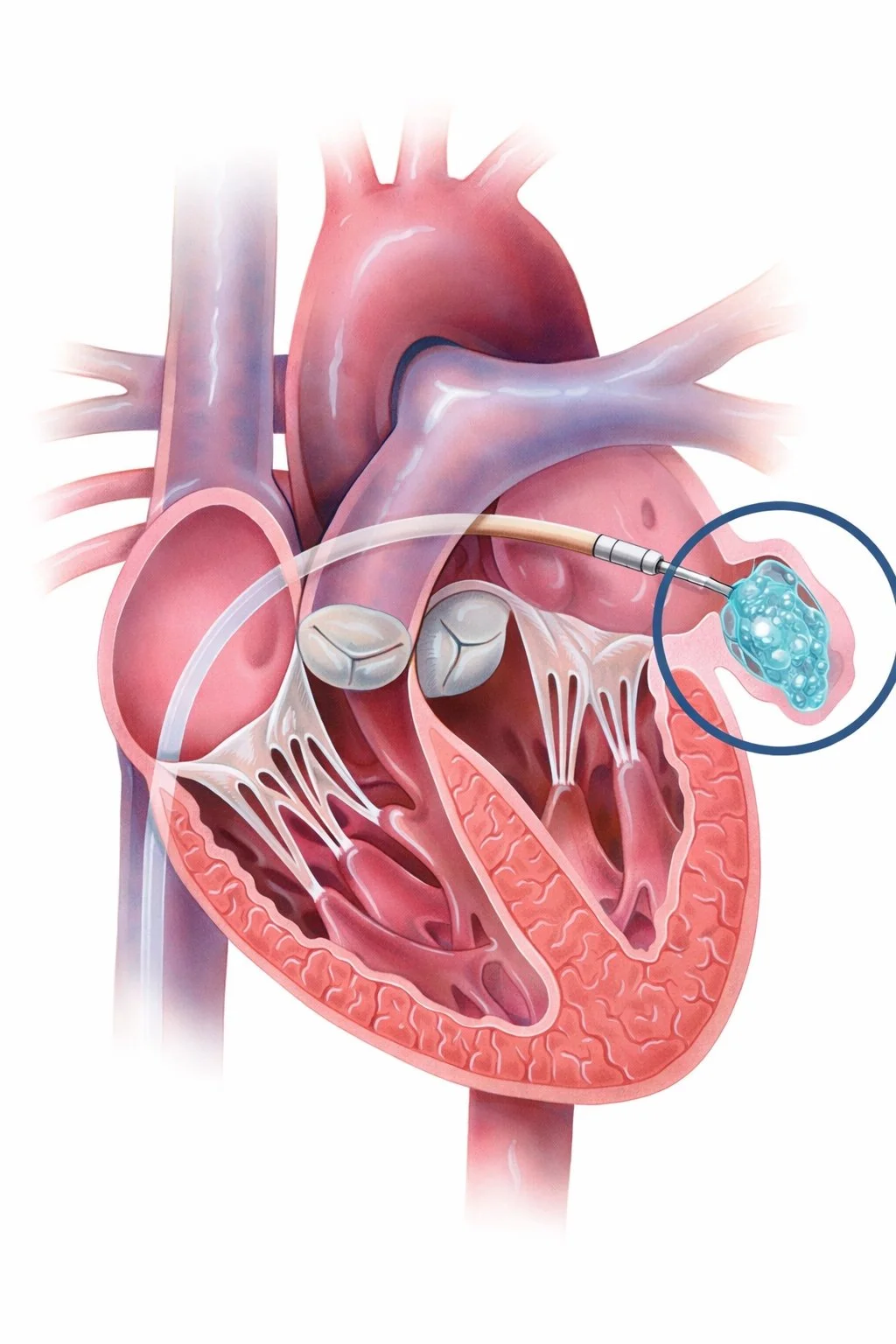
Protection That Lets Life Shine Through
Stroke prevention for atrial fibrillation through personalized medical devices.
Parasol Medtech is developing a next-generation implant designed to prevent stroke in patients with atrial fibrillation, addressing critical safety and performance gaps in today’s solutions.
Atrial fibrillation (AFib) is one of the leading causes of stroke. In these patients, blood can pool in a small structure of the heart, leading to clot formation and potentially devastating neurological injury.
Current prevention strategies rely on:
Long-term blood thinners, which increase bleeding risk, or
Implantable closure devices, which still result in bleeding, leaks, or device-related clots in many cases.
Despite existing options, a significant portion of patients remain underserved.

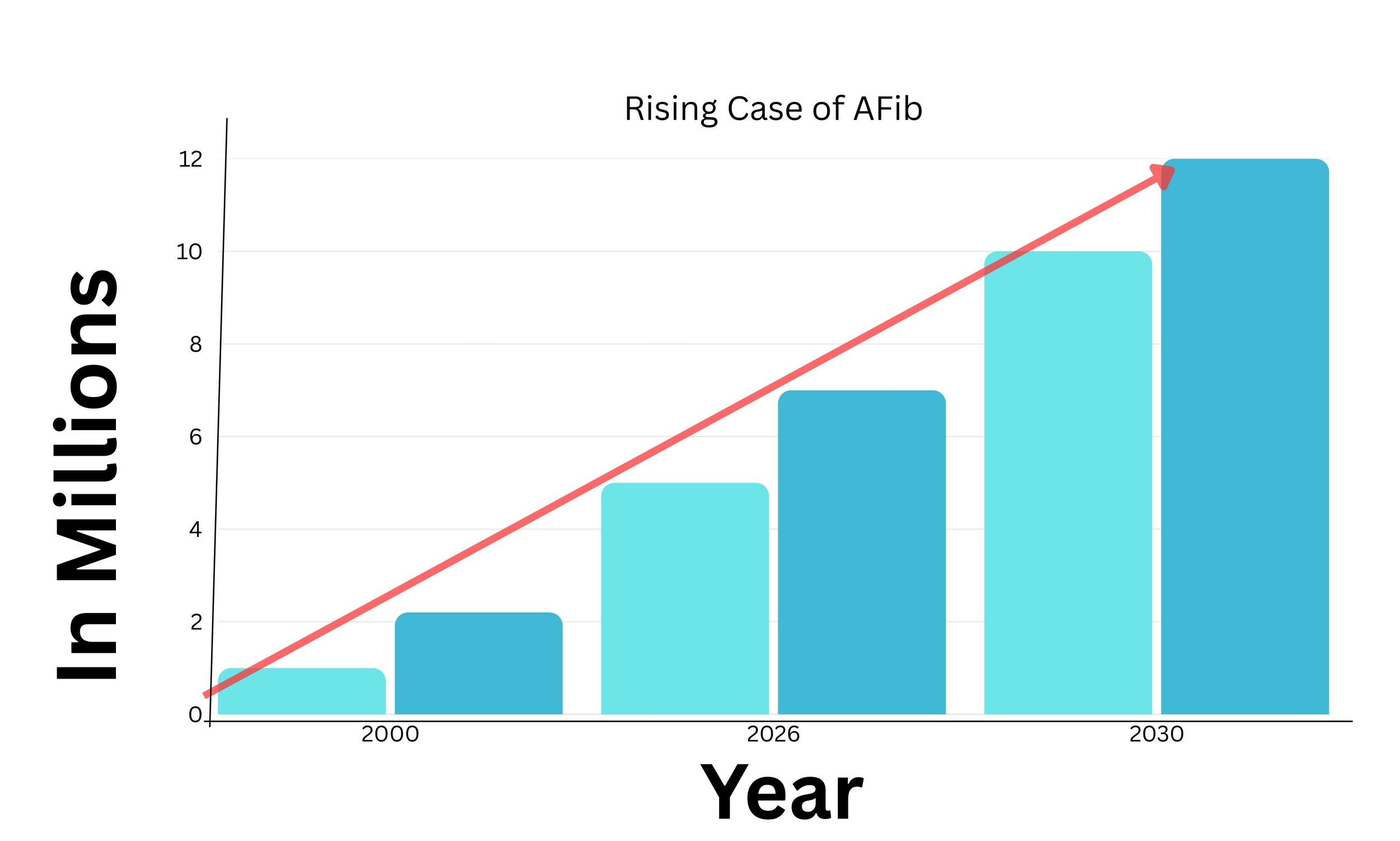
The Rising Prevalence of Atrial Fibrillation
Atrial fibrillation (AFib) is an irregular and often very rapid heart rhythm. An irregular heart rhythm is called an arrhythmia. AFib can lead to blood clots in the heart. The condition also increases the risk of stroke, heart failure, and other heart-related complications.
During atrial fibrillation, the heart's upper chambers, called the atria, beat chaotically and irregularly. They beat out of sync with the lower heart chambers, called the ventricles. AFib may cause a fast, pounding heartbeat, shortness of breath, or light-headedness. Some people don't notice symptoms.
AFib is three times more common than previously thought, affecting nearly 5% of the population, or 10.5 million U.S. adults (i.e., 1 in 4 adults over 40), according to new estimates.

A healthy heart beats in a steady rhythm, but with Afib, the rhythm breaks
Regular rhythm Irregular rhythm

Ba-dum-ba-dum-ba-dum
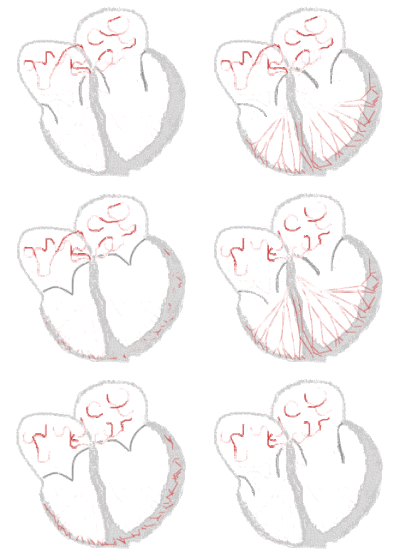
Ba-dum-dum-dum-ba-ba-dum-dum-dum
When rhythm is chaotic, blood pools in the LAA, can clot and can go to the brain causing a stroke
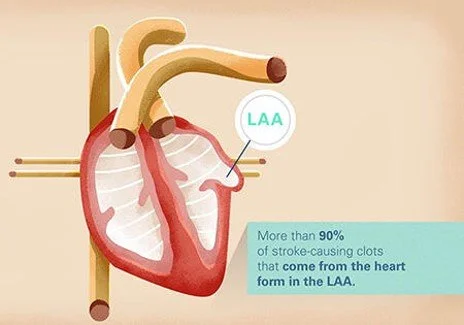
How a clot in the heart can lead to a blockage of flow in the brain and a stroke
The Parasol Solution
We are developing a novel, patient-specific left atrial appendage closure device designed to improve fit, sealing, and long-term safety. By prioritizing personalization and precision, our approach aims to:
Reduce procedural and post-implant complications.
Minimize residual leaks and clot formation.
Decrease reliance on lifelong anticoagulation for eligible patients.